

Webzine
Known for “Korean Wheat”: Trust Built Through 30 Years on a Single Path
2025.12.22
Nenia Business Unit Interview _ Gyeongnam Eco-Friendly Korean Wheat Co., Ltd.
Known for “Korean Wheat”: Trust Built Through 30 Years on a Single Path
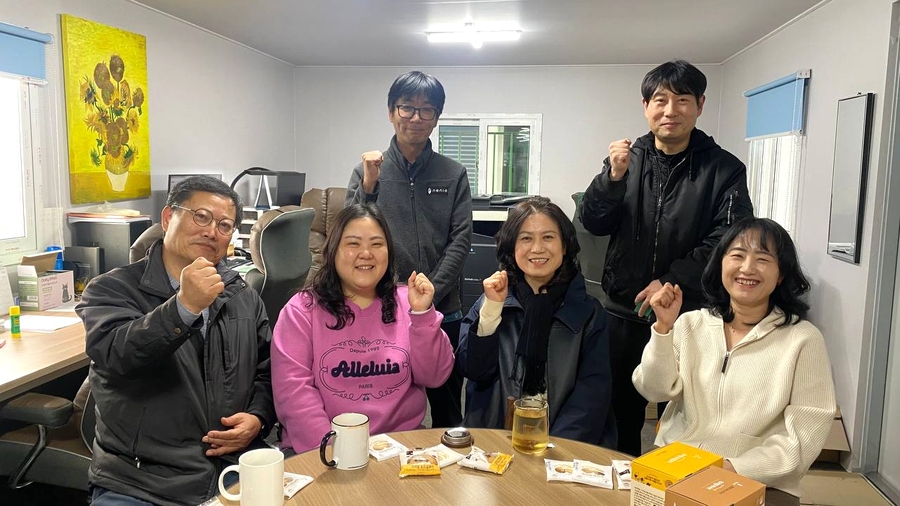
△ Members of the Gyeongnam Business Unit (Photo: Nenia)
Nenia supplies eco-friendly food products to school meal programs. As of 2025, there are 32 business units nationwide that supply Nenia products to the school foodservice market. Among them, Gyeongnam Eco-Friendly Korean Wheat Co., Ltd. (hereafter, the Gyeongnam Business Unit) has worked with Nenia the longest and records the highest sales among all regional units.
Curious about the know-how behind the Gyeongnam Business Unit, the Nenia Webzine editorial team met with CEO Heo Tae-yu and staff members who visit schools in person to promote Nenia products, and listened to their stories.
The Gyeongnam Korean Wheat Business Unit: 27 Years of History Interview with CEO Heo Tae-yu |
Toward a 10% Self-Sufficiency Rate for Korean Wheat
Urgent Need for Consumption-Expansion Policies, Including Price Gap Support
The Gyeongnam Business Unit is also closely connected to Nenia CEO Moon Young-jin. In 1998, Heo Tae-yu, Moon Young-jin, and one other person founded the Gyeongnam Korean Wheat Business Unit in Changwon, Gyeongnam Province. As the business gradually expanded, one partner became independent to operate a Korean wheat bread factory. Moon Young-jin moved to Seoul to pursue a nationwide Korean wheat school-meals business, and around 2005, Heo Tae-yu took over the Gyeongnam Business Unit, which he continues to lead today.
The Gyeongnam Business Unit faced a crisis in 2020. With the outbreak of COVID-19, school meal programs were suspended, making it impossible to sell products. Losses continued to accumulate, to the point where Heo considered whether the business could continue at all. The hardship extended into 2021.
During this period, Heo participated in the founding of the Gyeongnam Eco-Friendly Cooperative Business Association and joined the eco-friendly agricultural produce box program, which allowed the business to narrowly survive. This program involved the provincial education office purchasing eco-friendly agricultural products—whose sales channels had disappeared due to the suspension of school meals—using “education disaster relief funds” and delivering them to students’ homes. Heo explained that by supplying just one item, a 500-gram bag of Korean wheat flour, he was finally able to clear the accumulated losses and regain his footing.
To fully understand how Heo came to establish the Gyeongnam Business Unit, it is necessary to briefly review the history of the Korean wheat revival movement.
Traditionally, Korean farmers grew barley or wheat on their farms. However, in 1946 the government began importing wheat, and from the 1950s the United States provided wheat as free aid. In 1984, the government stopped purchasing domestically produced “Korean wheat.” In 1990, under pressure from countries such as the United States, the government even eliminated tariffs on imported wheat and implemented full import liberalization. As domestic milling companies began producing processed foods using cheap imported wheat, farmers abandoned Korean wheat cultivation. By the late 1980s, even Korean wheat seeds had become difficult to obtain.
In response, socially conscious organizations across Korea came together in 1991 to establish the Korean Wheat Revival Movement Headquarters. The movement expanded nationwide, with 160,000 citizens raising 3.8 billion won in funds. The organization operated with two branches: a movement division and a business division. However, the business division ultimately failed, and after many twists and turns, it was dissolved in 1997, leaving only the movement division in operation. As part of continued efforts to revive Korean wheat, businesses such as Nenia (formerly Korean Wheat School Meals) and Gyeongnam Eco-Friendly Korean Wheat began to emerge. The Gyeongnam Business Unit was also founded with the purpose of saving Korean wheat.
Below is a question-and-answer interview with CEO Heo.
Please introduce yourself
I am originally from Goseong, Gyeongnam Province. I moved to Masan as a child and attended school there from elementary school through university, and I have lived as a Masan resident ever since. The political climate during my student days was turbulent, so I naturally became involved in the student movement. I took the lead in street demonstrations in Masan demanding constitutional reform for direct presidential elections, was placed on a wanted list, later arrested, and imprisoned.
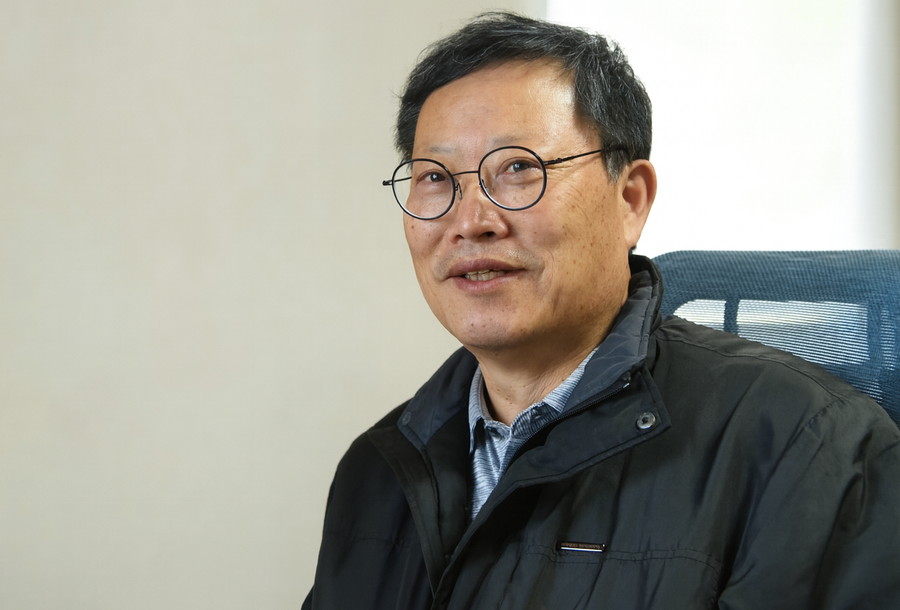
△ CEO Heo Tae-yu of Gyeongnam Eco-Friendly Korean Wheat (Photo: Nenia)
I got married in 1992, and in 1995, in order to make a living, I joined the Gyeongnam Regional Headquarters of the Korean Wheat Revival Movement as head of its business division. The person who interviewed me was Chairman Kim Seok-ho, who had long been active in the Catholic Farmers’ Association.
I personally delivered Korean wheat products throughout Gyeongnam Province, mainly to Catholic church networks. At the time, the Korean wheat revival movement was led largely by the Catholic Farmers’ Association.
Currently, there is a cooperative body of Korean wheat production complexes called the Gyeongnam Korean Wheat Producers Council. Kim Seok-ho serves as its chair, and I serve as its secretary-general.
Chairman Kim Seok-ho participated in the farmers’ movement as secretary-general of the Gyeongnam Federation of the Catholic Farmers’ Association from 1979 to 1985. In 1986, when the Hansalim Consumer Cooperative was launched in Masan, he worked as a practitioner and, as a local farming activist, discovered wheat seeds in Daepyeong-ri, Chogye-myeon, Hapcheon County. By planting those seeds in 1987 and harvesting them in 1988, he played a major role in preserving the lineage of Korean wheat.
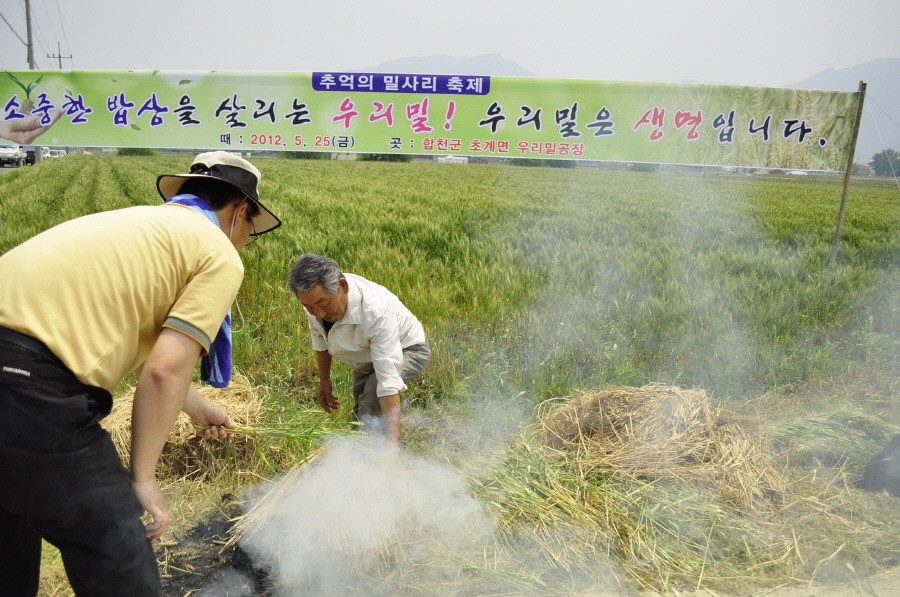
△ CEO Heo Tae-yu (left) performing milssari—burning green wheat stalks to roast the grains (Photo: Nenia)
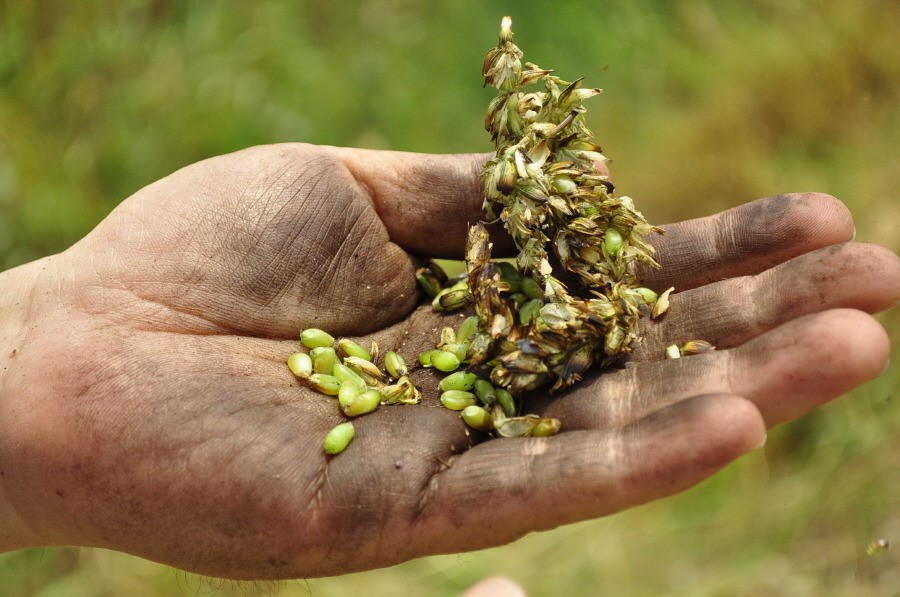
△ The roasted wheat grains are not hard and have a savory flavor. In times of food scarcity, people practiced milssari before the wheat harvest. (Photo: Nenia)
What areas does the Gyeongnam Business Unit cover?
We are responsible for major areas in Gyeongnam Province, supplying Nenia products mainly to schools in Masan, Changwon, Haman, Jinhae, Changnyeong, Gimhae, Yangsan, and Miryang.
What are your main products?
Products that receive strong responses from schools and are ordered consistently include Korean wheat water dumplings, beef bone broth concentrate made from antibiotic-free Korean beef, organic authentic Greek yogurt, Korean wheat chocolate chip cookie dough, half-cut garlic toast, blueberry yogurt, whole mandarins (including peel), Hallabong Dasom, tri-color honey rice cakes, and organic vanilla ice cream.
What is the current status of school meal support centers in Gyeongnam?
Out of 18 cities and counties in Gyeongnam Province, 11 have school meal support centers, including Geochang, Gimhae, Miryang, Changnyeong, Haman, and Jinju. Ironically, Changwon—the most populous city in Gyeongnam with over one million residents—once had a center, but it was later shut down.
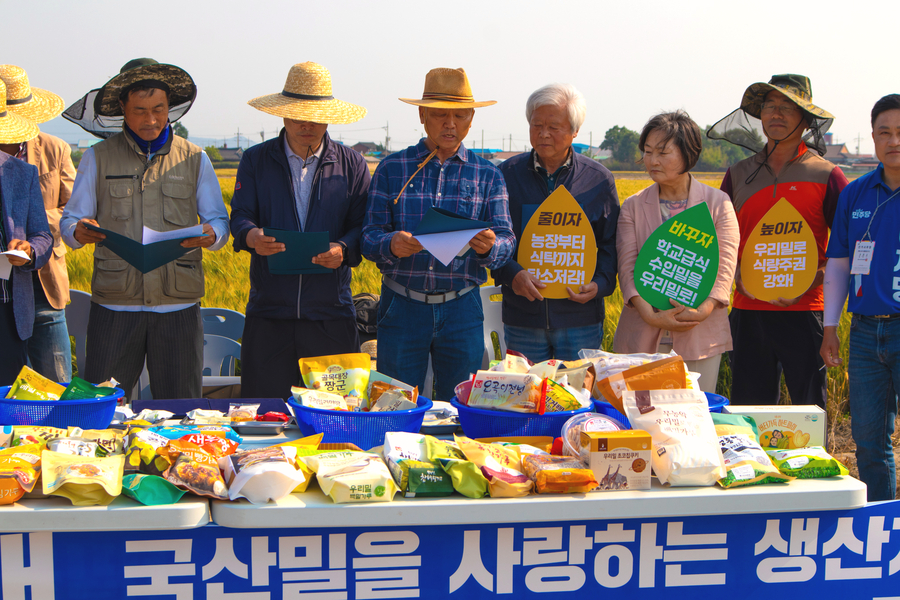
Most centers focus on local agricultural products rather than eco-friendly ones. We proposed establishing a provincial-level control tower in Gyeongnam, but officials have been reluctant to take action, leaving the proposal stalled.
Gyeongnam has long seen controversy over free eco-friendly school meals, depending on the political orientation of local leaders, and as a result, eco-friendly school meals have not expanded easily.
In 2024, Changwon City purchased land for a “Changwon Food Integrated Support Center” with a budget of 5 billion won and even began excavation work. However, a conservative mayor canceled the project entirely, citing concerns about excessive operating costs. It is rumored that the forced cancellation—despite returning secured national funds—was part of an effort to erase the achievements of the previous Democratic Party mayor. The mayor later lost office after being convicted of violating election laws.
In my view, Gyeongnam Province, as a metropolitan government, should establish a central hub, set operating principles, and define food handling standards for city and county centers, thereby providing clear guidelines for local governments.
What is the reason behind the Gyeongnam Business Unit’s high sales?
(Laughs) High sales do not necessarily mean high profits. The Gyeongnam Business Unit handles only Nenia-branded school meal products. We could make more profit by distributing products that use chemical additives or imported wheat, but supplying products that follow Nenia’s manufacturing principles earns trust from the market. Building trust is what matters.
Because we have handled only Nenia products for so long, we have come to be seen locally as something of an original Korean wheat school meal supplier. I think that is why our sales are higher than those of other regional units.
School meals are suspended for about two months during summer and winter vacations, so sales are almost nonexistent during those periods. That is why we work to increase distribution sales through consumer cooperatives, eco-friendly organic shops, and local food direct markets. We need steady sales during the school year in order to continue paying staff wages during vacation periods.
The government has set a goal of achieving a 10% Korean wheat self-sufficiency rate (about 200,000 tons) by 2030. From the current level of 1–2%, that requires roughly a tenfold increase. Nenia’s Korean wheat school meals business also has the potential to grow tenfold. To make that happen, consumption policies backed by government budgets—such as price gap subsidy programs for Korean wheat—are essential. We have laid the groundwork, so I am hoping something will happen next year.
What are the main difficulties you face in running the business?
If there is an order, we deliver even a single bottle of soup soy sauce. We have often been unable to collect payment—cases where customers disappear overnight without paying, cannot be contacted, or leave locked doors behind. If Changwon were to reestablish a school meal support center that handles all processed foods, at least we would no longer have to worry about unpaid invoices.
In 2019, the Gyeongnam Provincial Council revised the Gyeongnam School Meal Support Ordinance, changing the phrases “eco-friendly agricultural products” and “safe” to “excellent local agricultural and fishery products” and “quality ingredients,” effectively weakening the supply standards. References to eco-friendliness and safety were removed from the ordinance. We plan to continue efforts with local residents to restore it. It should be a basic requirement that center directors have expertise in eco-friendly food.
Why hasn’t wheat self-sufficiency increased despite the Grain Industry Promotion Act?
There are policies to encourage production by wheat farmers, but there are not enough policies to expand consumption. If consumption does not increase, inventories naturally build up, and when inventories accumulate, self-sufficiency declines.
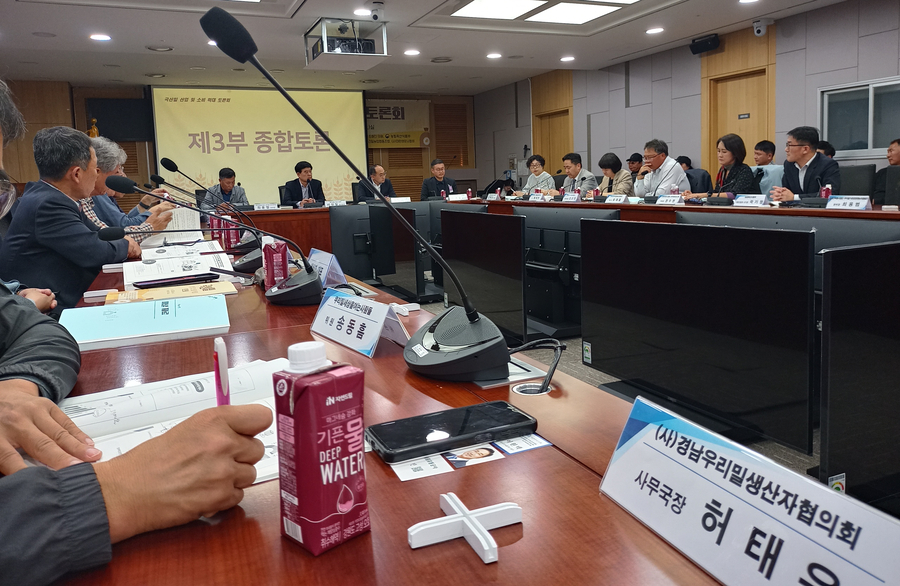
△ CEO Heo Tae-yu participating as secretary-general of the Gyeongnam Korean Wheat Producers Council in the “Forum on the Domestic Wheat Industry and Consumption Expansion,” held at the National Assembly on October 30, 2023. CEO Heo is actively engaged in a wide range of activities related to Korean wheat, including proposing policy measures. (Photo provided by Heo Tae-yu)
First, if the government subsidizes the price difference between Korean wheat and imported wheat, it would be a major help for school meals. Even supporting 100–150 won per student once a week would visibly increase Korean wheat use in the school meal market. For school meals alone, a budget of 10–20 billion won would suffice, raising Korean wheat self-sufficiency to 3–5%.
Ultimately, it is necessary to legislate mandatory use of Korean wheat in school meals. When self-sufficiency reaches 5%, it will have a major impact on the market. Importers will not want to give up their dominance, but the practices of milling companies and the awareness of government ministries must change.
Specifically, the Ministry of Agriculture, Food and Rural Affairs’ Second Basic Plan for Grain Industry Promotion must include concrete measures to drive Korean wheat self-sufficiency to 5%. The key issues are how to expand production and encourage consumption. Production subsidies should be increased from 1 million won per hectare to 2 million won, and the purchasing system should be unified under government control. To promote consumption, public meal support budgets and policies are needed.
These Korean wheat promotion policies are urgently necessary for long-term food security in the context of the climate crisis. I hope the Lee Jae-myung administration will raise Korean wheat self-sufficiency to at least 5%.
Is the idea of “low-carbon climate meals” being felt in Gyeongnam?
Vegetables are usually judged by whether they are “local.” Yet some officials even ask whether Korean wheat is local. Given that Korea currently relies on imported wheat for 99% of consumption, all Korean wheat should be considered local.
Although Gyeongnam has several school meal support centers, they mainly handle primary agricultural products, and Nenia’s eco-friendly, Korean wheat-based processed foods are rarely included. To achieve low-carbon climate meals centered on eco-friendly produce and Korean wheat, support centers need to take the lead.
How do you see the future of the Gyeongnam Business Unit?
Policies that dramatically increase wheat self-sufficiency are urgently needed, and this is impossible without consumption policies. Consumption creates a virtuous cycle, which in turn advances processing technology. Current Korean wheat consumption is only 20,000–30,000 tons per year. To reach the government target of 200,000 tons, strong production and consumption policies are required. If that happens, the Korean wheat market will grow tenfold, and I believe the Gyeongnam Business Unit will be able to grow steadily alongside it.
What do you hope for from Nenia headquarters?
Headquarters is building a logistics center, and I believe this will allow us to envision a hopeful future for Nenia. I hope they will stabilize logistics and build a foundation for in-house processing, starting with even one or two products that can become flagship items. The more these efforts continue, the more Nenia will grow.
Gyeongnam Business Unit Promotion Team Interview Director Kim Sun-mi, Promotion Team Leader Kim Yeon-gyun |
Veterans with Over 10 Years of Experience Promoting Nenia Products
Honest, Unexaggerated Product Explanations
Director Kim Sun-mi handles order management and school promotion in Gimhae, Yangsan, and Miryang. Promotion Team Leader Kim Yeon-gyun is responsible for schools in Masan, Changwon, Jinhae, Haman, and Changnyeong. Both have over 10 years of experience promoting Nenia products and cover wide areas, reflecting the regional characteristics of Gyeongnam.
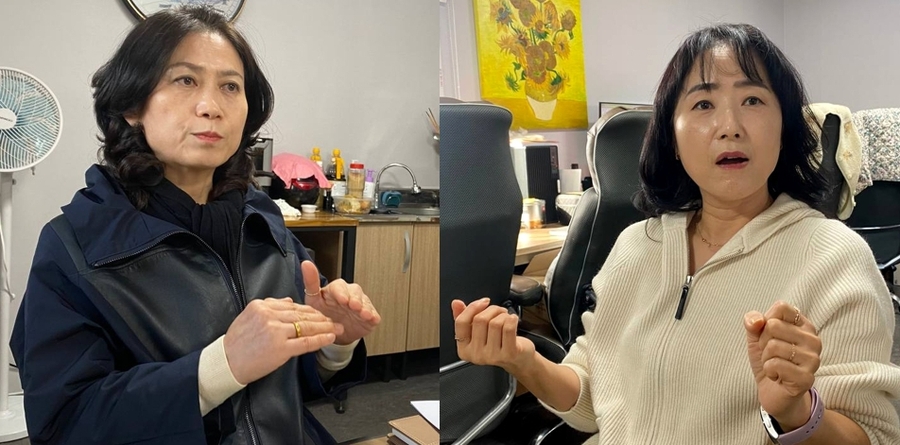
△ Promotion Team Leader Kim Yeon-gyun (left) and Director Kim Sun-mi (Photo: Nenia)
What questions or concerns do school nutrition teachers and cooks raise most often?
They often talk about budget issues. In school meals, price and quality are the most important factors. Many other companies sell Korean wheat products, but while they use Korean wheat flour, they may use Chinese red beans or chemical additives. Nenia products are safe and reliable, which is their strength, but some say the price feels burdensome.
Please share your promotion know-how
Both of us have been promoting only Nenia products at the Gyeongnam Business Unit for over 10 years. We have worked for a long time promoting products from a single company. By repeatedly visiting the same schools in our assigned areas, relationships are built and trust accumulates. In contrast, many other school meal suppliers handle products from multiple companies.
When explaining products, we do so honestly, without exaggeration. Just as people have different tastes, each school has its own preferences. Products like beef bone broth concentrate, rolled dumplings, fresh strawberry jam, dinner rolls, Greek yogurt, and plain yogurt remain consistently popular.
What are the challenges?
Because the coverage area is wide, we have to move constantly. We go out in the morning and travel all day. At times, we have visited up to 20 schools in a single day. Nutrition teachers usually plan menus from the end of the month to the beginning of the next, so we need to focus our efforts before that period.
There are times when our feelings are hurt. If there is even a minor issue with a product, the blame comes to us. Once someone is disappointed, it is not easy to regain trust. Still, we keep showing our faces and greeting people diligently. Some schools placed orders only after seven years of promotion. Hearing that a product was delicious makes the effort worthwhile.
The biggest issue is the limited school meal budget. Nenia products have high specifications, but because budgets are tight, schools sometimes hesitate to choose them.
What changes do you think are needed in school meals?
Schools conduct preference surveys among parents and students, and there is a tendency to favor flashy or decorative foods. To score well in such surveys, choices become increasingly showy.
However, catering only to children’s tastes and preferences may not be appropriate. School meals are education. Children should also have opportunities to eat traditional foods like acorn jelly and seasoned vegetables. Rather than relying on preference surveys, a more educational approach is needed, supported institutionally and politically.
Many people demand all four: high specifications, attractive appearance, low price, and stable supply. It is difficult to satisfy all of these at once. If ingredients are good and no additives are used, the product may not be “stable,” but it is certainly “safe.”
Epilogue
Walking a single path throughout one’s life is not easy. CEO Heo Tae-yu’s unwavering commitment to reviving Korean wheat has protected both Gyeongnam and Korean wheat for over 30 years. Just as the wave of free eco-friendly school meals arrived 15 years ago, his hope—that we now move faster and further toward low-carbon climate meals while strengthening food security—deserves to be fully heard by the government.
The words of Director Kim Sun-mi and Promotion Team Leader Kim Yeon-gyun—that trust, credibility, and sincerity are the keys to effective promotion—linger long in the heart. We express our deep gratitude to the Gyeongnam Business Unit, which continues to persevere quietly on the front lines. Nenia will continue to walk a principled path and grow together with its business units.
December 9, 2025
Nenia Webzine Editorial Team


