

Webzine
The Secret Behind Sandlerae's Sikhye That No Machine Can Replicate
2026.02.25
Visiting Nenia's Production Partners (13)
Sandlerae Agricultural Corporation
Drive through Jangseong in South Jeolla Province and you'll notice something a little unexpected: fields that look almost like lawns. The area is actually one of Korea's major turf grass producing regions. Nestled close to those grassy fields is a place whose name literally means "where the mountains and fields sing" — Sandlerae Agricultural Corporation. This is where Nenia's Organic Traditional Sikhye and Organic Pumpkin Sikhye are made.
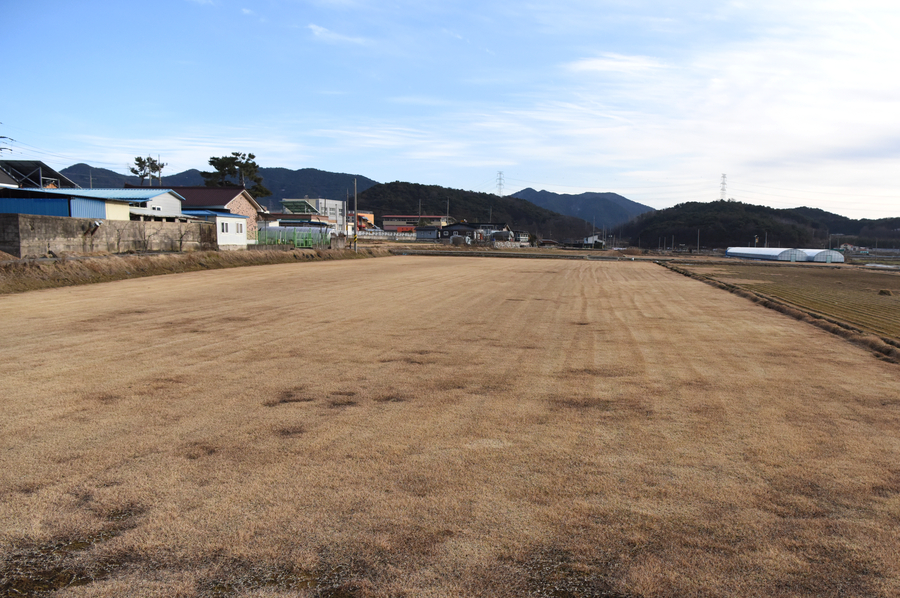
△ The turf grass fields stretching out in front of Sandlerae Foods in Jangseong, South Jeolla Province (Photo: Nenia)
Nenia's sikhye, made with organic waxy barley malt, has a sweetness that never feels sharp or cloying — just deep and smooth. It's not uncommon to hear that once someone tries it, they tend to stock up on several bottles at a time rather than just one. The Nenia webzine editorial team paid a visit to Sandlerae to find out what's behind that distinctive depth of flavor.
Sandlerae is run by CEO Baek So-yeon. It all started with her mother's cooking. Her kimchi and sikhye were so good that word spread, and what began as small informal sales gradually grew into something much bigger. Around that time, Baek's mother noticed her daughter — who had been living and working away from home — wasn't doing well health-wise, and called her back. Baek returned to her hometown and began making kimchi and sikhye alongside her mother, building the business under the name Sandlerae. In 2010, that's how it all officially began.
The Secret Behind the Deep Flavor of Nenia's Organic Traditional Sikhye
We were curious about what makes Sandlerae's sikhye so exceptionally good. "It's because the ingredients are high quality" felt like too simple an answer. So as soon as we sat down for the interview, we asked CEO Baek straight away. Here's what she shared.

△ CEO Baek So-yeon of Sandlerae Foods (Photo: Nenia)
Sandlerae makes the malt for Nenia's organic sikhye using organic waxy barley. The malt is strained the day before and left overnight for the sediment to settle. The next day, only the clear liquid on top is drawn off and brought to a boil, with impurities skimmed off by hand for over 30 minutes. Once the impurities are fully removed, organic sugar is added and the mixture is boiled for another 15 minutes or so, before being bottled and cooled to finish the product.
Hearing this, you might think that as long as you use good ingredients and skim off the impurities, anyone could make a great sikhye. But it's not quite that straightforward. There's something extra involved — what Koreans call "son-mat," the taste of handwork. The malt-straining process is particularly distinctive in that it's done entirely by hand rather than relying on machinery.
"A pressing machine just doesn't produce this flavor," Baek explains. "The color of the finished sikhye varies depending on the malt concentration. And whether you use only the clear liquid after straining or allow some of the sediment in changes both the color and the taste."
"Son-mat" turned out to be more than just a charming expression. Because the malt is strained by hand, there are subtle differences in concentration, texture, and taste that only come from that physical touch. The technique Baek has built up in her body over years isn't something others can easily replicate. She went on to explain the process in a bit more detail.
"After straining the malt, I separate out just the clear liquid on top and bring it to a boil, continuously skimming off impurities through a fine mesh. Adding the sugar too early prevents the impurities from rising, so the order really matters. When measuring the sugar content, I also have to account for the fact that the malt germinates differently in summer and winter, which affects the sweetness. And before we bottle the sikhye, we strain it twice more through hemp cloth. The result is a sikhye that's both clean and clear, with a really deep flavor."
This process is genuinely hard work. Kneading the malt by hand takes a lot of strength in the fingers, wrists, and shoulders — and you can see it in Baek's hands, where the knuckles have thickened over time. That's because she works alongside her staff rather than standing back and watching. "I've tried doing it with machines several times," she says, "but strangely, you really do need to knead the malt by hand to get that flavor. Machines just can't replicate what we make. I keep hoping someone will invent one that can."
But the secret to the flavor doesn't stop at kneading. It also comes down to how the malt is strained after boiling — the time given for the powder to settle, the type and amount of ginger used, and the method for saccharifying the rice all reflect Sandlerae's accumulated know-how. Even the type of sugar makes a difference. Nenia's sikhye uses organic sugar, which gives a softer sweetness, while organic rice and organic waxy barley contribute to that deeper flavor. Interestingly, people who drink Nenia's organic sikhye regularly tend to notice immediately when the ingredients change.
As Good As It Gets
Nenia's Organic Pumpkin Sikhye
Wash → peel → remove seeds → wash again → cut → freeze → heat → blend → strain pumpkin fiber by hand… This is just part of what goes into making Nenia's Organic Pumpkin Sikhye. The most labor-intensive step in the whole process is straining the boiled kabocha squash through a hemp cloth bag until all the fiber is removed to a fine, smooth consistency. To make 450 bottles of 1.5-liter sikhye, the bag has to be kneaded and shaken by hand for more than two hours. And on top of that, the malt still needs to be hand-kneaded as well. When Nenia orders 1,000 bottles of pumpkin sikhye, Sandlerae typically takes three to four days to produce them.
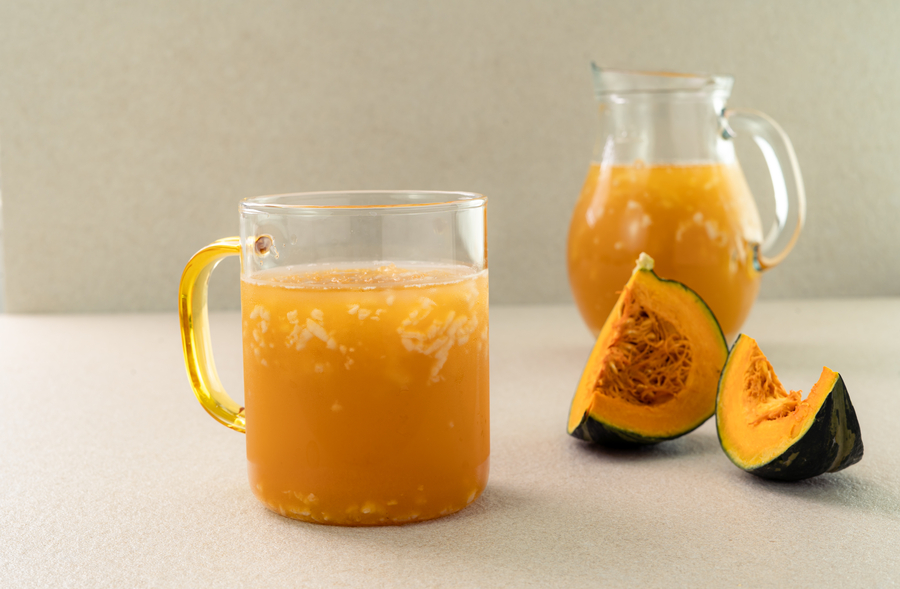
△ Nenia's Organic Pumpkin Sikhye — the flavors of soft kabocha squash and waxy barley malt come together to create something truly heavenly.
The pumpkin sikhye is made with organic kabocha squash. Sandlerae doesn't only make Nenia's sikhye, though — they also produce and sell a non-certified "regular sikhye" using conventional barley malt, while Nenia's organic version uses certified waxy barley.
Baek had wanted to obtain traditional food certification for the sikhye, but the application was rejected because of the ginger in the recipe. "Kimchi can get traditional food certification even with ginger in it," she says, "but with sikhye, ginger means it doesn't even qualify for review." Still, removing the ginger would significantly alter the taste, so she has no intention of leaving it out just to earn a certification. Sandlerae uses organic native ginger in Nenia's sikhye.
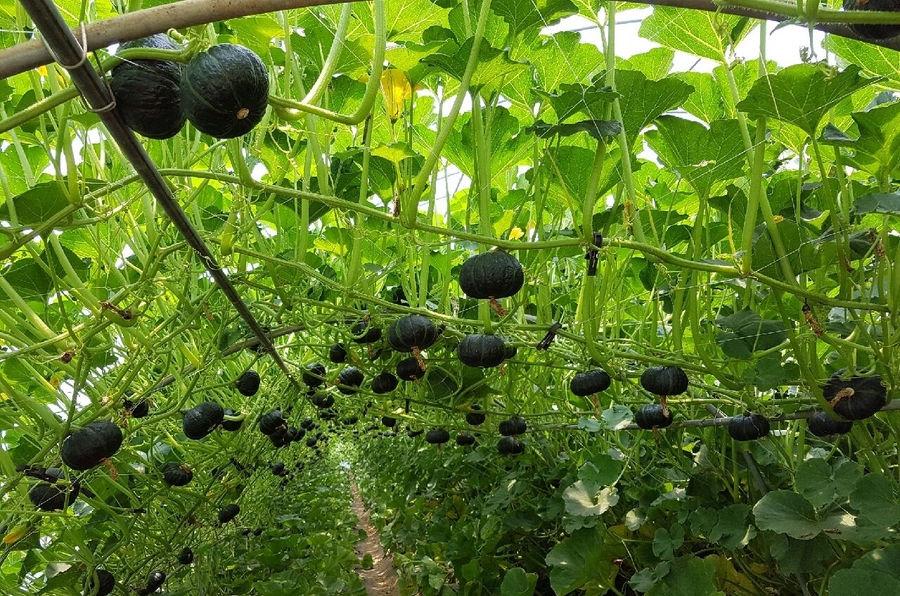
△ The organic kabocha squash used to make Nenia's Pumpkin Sikhye (Photo: Sandlerae)
Sandlerae started out making and selling kimchi exclusively, and only produced sikhye in limited quantities for export. Any bottles left after export would be given away as extras to kimchi customers. Then came a connection with Kim Tae-jung, Nenia's Executive Director, who practices natural farming methods in Jangseong. He asked Baek to make sikhye to organic specifications and send it to Nenia — and the response was glowing. That was the start of the partnership, and Sandlerae has been making Nenia's organic sikhye ever since, while also supplying regular sikhye to local agricultural cooperatives.
No Matter How Hard It Gets, the Recipe Stays the Same
Baek says that her know-how is simply "not changing the recipe — because if you deviate from Sandlerae's recipe, the taste changes." Other producers sometimes use pumpkin powder or juice extractors to make pumpkin sikhye. She tried both — sourcing equipment through referrals and experimenting with a juicing machine for the malt — but none of it could recreate the flavor Sandlerae was known for.
When asked what's most challenging about the work, the answer came without hesitation: "The physical intensity." Because of that, Baek says she doesn't push to grow the business beyond what's manageable. Instead, she puts care and effort into making delicious sikhye and putting it out into the world — and the sikhye shaped by mountains and fields makes its way, just like that, to Nenia's customers.

△ Nenia's Organic Traditional Sikhye — crafted from mountains and fields, it's known for its clean, deep, and subtly layered flavor.
January 2026 Nenia Web Magazine Editorial Team


