

Webzine
"Sanggu, are you still making acorn jelly?" — A Phone Call from an Old Teacher
2026.02.25
Visiting Nenia's Production Partners (14)
Nogogdan Foods Agricultural Corporation
Jelly Carried on Her Head, a Family Fed
The current CEO of Nogogdan Foods is Kang Sang-gil (57), but this story really begins with his mother, Jo Seok-sun (80). Born in Yeosu, South Jeolla Province, she married into Yongsan-ri, Unbong-eup, Namwon City in North Jeolla — a village nestled at the foot of Jirisan Mountain. Life was hard, and to make ends meet, she started selling acorn jelly. She'd make it at home and carry it out to sell — mainly at mountain lodges, Namwon Market, and Unbong Market.
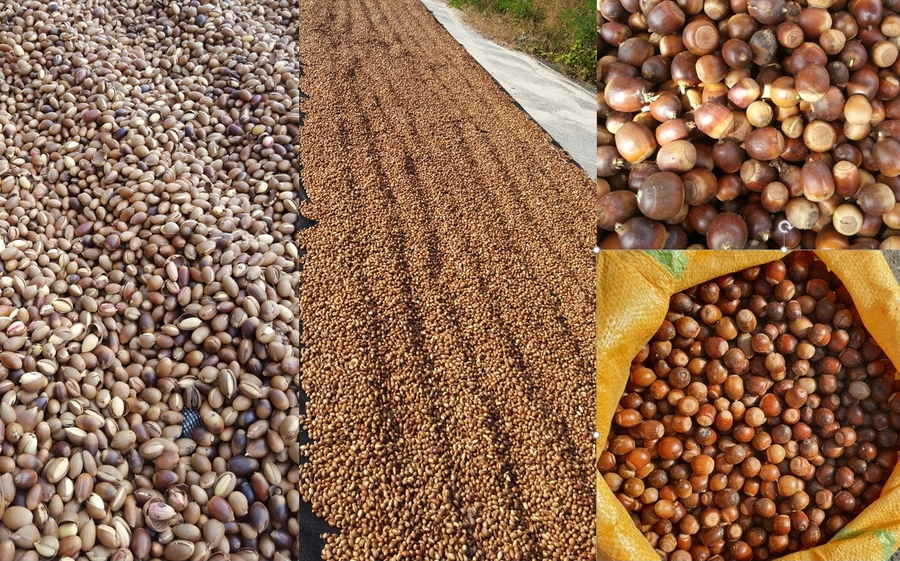
△ Rather than using processed acorn powder, Nogogdan Foods sources whole acorns and shells them in-house. (Photo: Nogogdan Foods)
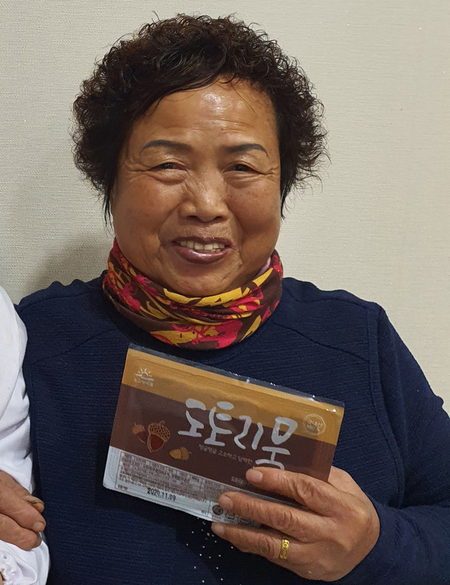
"My mother would balance the acorn jelly on her head and go out to sell it — it was a real cottage industry. My parents would build a wood fire to cook the jelly. There were plenty of acorn trees nearby, and all winter long we'd crack the shells with a hammer. You have to be quick about it, because if you leave acorns too long, the bugs get to them."
When Kang was in elementary school, he once wrapped up some jelly in a cloth and brought it to his homeroom teacher — who couldn't stop raving about how good it was. The teacher even gave him the nickname "Acorn." More than ten years later, out of the blue, that same teacher called and said the jelly he'd eaten all those years ago had been on his mind, and asked if Kang was still making it. The very next day, the teacher showed up with a group of colleagues, and they all tucked into the acorn jelly with great enthusiasm.
"My mother learned about food from a young age, going along with my grandmother to help at village feasts," Kang explains. "My grandmother's jelly was wonderfully chewy and full of flavor." When his mother married and needed to put her children through school, it was only natural that she turned to making and selling acorn jelly — and the touch she brought to it was passed down from her own mother. Kang's father did his part too, tending the farm by day and chopping firewood to fuel the cooking.
Acorns are thought to be one of humanity's oldest foods. They've been found at Neolithic sites from the era when farming first began, likely serving as a crucial supplement when food was scarce. A charred cache of acorns was unearthed at the Amsa-dong site in Seoul's Gangdong District, and a dedicated acorn storage pit was discovered at the Neolithic Bibong-ri site in Changnyeong. According to the Korean Food Culture Dictionary, acorns have historically been used to make everything from jelly and rice to porridge, rice cakes, noodles, dumplings, fermented paste, pancakes, confections, and even wine.
A Son Returns Home and Opens Up the Market Across the Jirisan Region
Kang Sang-gil was born in 1969 and had been working in Seoul when, around 1991, a friend invited him to help sell roasted sweet potatoes on weekends. Some hours he earned over 10,000 won — remarkable at a time when his monthly salary was less than 300,000 won. Earning that much in a single hour doing street sales gave him his first real taste of what it meant to have a business instinct.
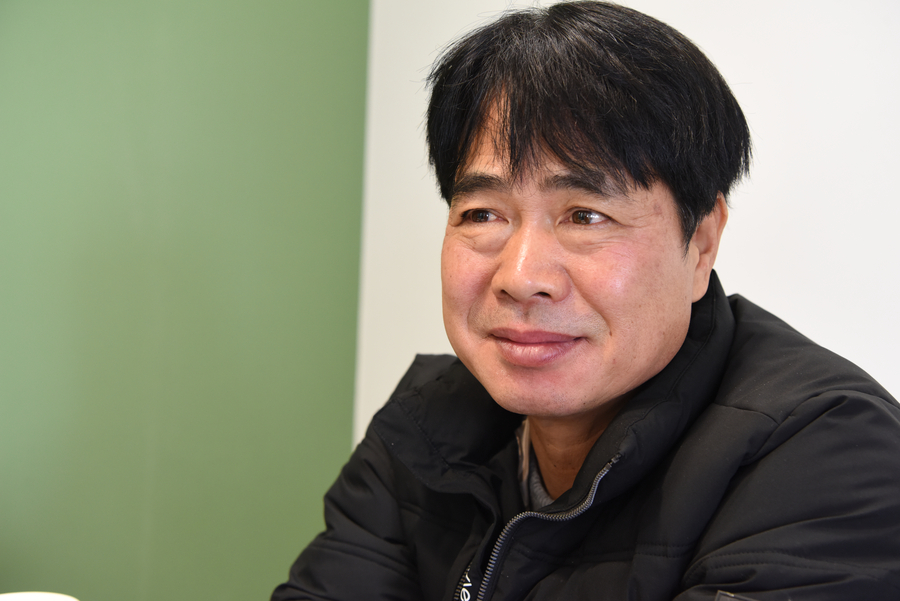
△ Nogogdan Foods CEO Kang Sang-gil (Photo: Nenia)
Meanwhile, his mother needed help navigating the paperwork and permits required to formalize her food manufacturing operation — more than she could manage on her own. She turned to her eldest son. Kang made up his mind to come home, but first decided he should learn something practical. He spent time in Mullae-dong, Yeongdeungpo, picking up skills in equipment installation and welding, then returned to Namwon and officially registered as a food manufacturer in April 1994. He named the company Nogogdan Foods, after the famous peak of Jirisan.
In those early days, production still relied on a traditional iron cauldron. His mother tended the fire while Kang stirred with a paddle. A year in, he built a steam cooker himself. From that point on, he set about opening up the entire Jirisan region as a market for acorn jelly — restaurants along the Baemsa Valley, Songgwangsa Temple, Naganeupseong Fortress, Mudeungsan Mountain, every restaurant in downtown Namwon, wedding halls, condominiums, and the Nambu Market in Jeonju. It was also around this time that he met his future wife, Kim Su-young, who is now the company's CEO.
What made Nogogdan Foods find its footing in the region? Simply put: taste. Their acorn jelly had a springy, bouncy texture and a distinct flavor that set it apart from everything else. And the secret to that flavor starts with a step that's simple in concept but demanding in practice — peeling the acorns.
The Difference Is in the Peeling — Building the Only Machine of Its Kind in Korea
"We built our own acorn-shelling machine, and there's nothing else like it in the country — because I made it myself." Kang got the idea from watching a rice threshing machine back in Unbong and adapted the principle to shell acorns. Inquiries started coming in from all over Korea after he posted photos and videos of the machine online, so he took everything down.
△ CEO Kang Sang-gil operating the custom acorn-shelling machine he built himself. (Photo: Nogogdan Foods)
Most acorn jelly producers use pre-processed acorn starch as their starting material. Nogogdan Foods, by contrast, sources whole acorns, hand-selects them, and shells them in-house before processing. Ko Jae-min, Head of Distribution, explains: "Jelly made from peeled acorns and jelly made without peeling taste and feel noticeably different — even after filtering. The yield and color are completely different." When processing 1 kg of fresh acorns, Nogogdan ends up with only about 300 grams of acorn powder — and that's on a good day with quality acorns.
If you search online for how to make acorn jelly, you'll find methods that skip peeling altogether and simply grind the whole acorn to extract the starch. Filtering removes the coarser bits, but anyone can intuit that starch made from peeled acorns and starch made without peeling are not the same thing.
Fine Filtration and Starch Extraction: Managing Elasticity, Color, and Bitterness
Nogogdan Foods' edge begins with thorough peeling, but the filtration process is equally meticulous. The starch is filtered in three passes — first through a 160-mesh screen, then 280-mesh, then 300-mesh — resulting in an exceptionally fine particle size. The acorn jelly this produces has a satisfying elasticity that's both chewy and smooth.
As Nogogdan grew, they expanded into wholesale, eventually dominating around 90% of the market at Nambu Market in Jeonju and the market in Sunchang. In 2010, they began supplying markets in Gwangju as well — and it was there that CEO Kang first met Ko Jae-min, who would become Head of Distribution and a key partner in growing the business.
Meeting Nenia: How Customer Feedback Became New Products
Ko Jae-min wears two hats: he's Nogogdan's Head of Distribution and also runs his own separate company. Through his connection with Nenia's Gwangju business unit, he introduced Nogogdan's jelly products at a Nenia workshop around 2015. Attendees were impressed by the quality and flavor, and Nenia headquarters agreed — the verdict was that it was something special. Nogogdan began supplying jelly to Nenia from that point on.
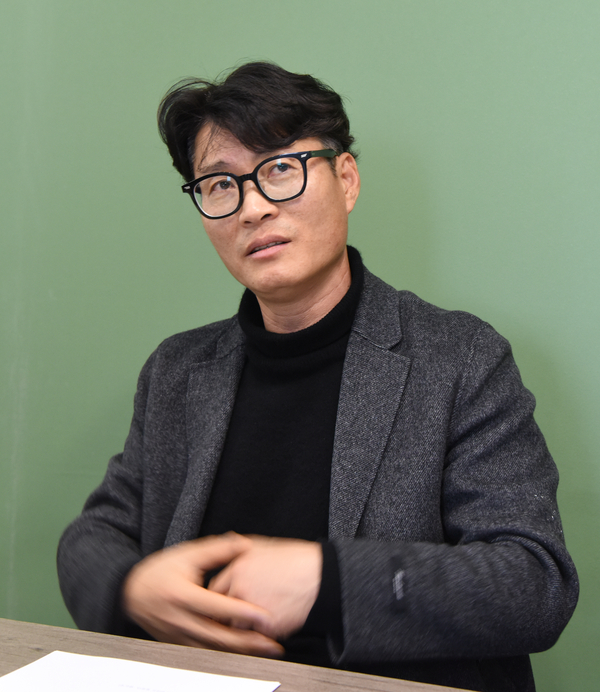
△ Ko Jae-min, Head of Distribution at Nogogdan Foods, who brokered the relationship with Nenia and continues to contribute expertise in product development. (Photo: Nenia)
"Nenia's recognition really changed things for us. We renovated the factory, got HACCP certification, and earned Traditional Food certification too."
Ko didn't stop there. Working alongside Nogogdan, he helped research and develop new jelly-based products. With his deep knowledge of the school food service market, he figured that adding color to the otherwise clear mung bean jelly (cheongpomuk) would make it more appealing. Together with Nogogdan, he developed a beet cheongpomuk with a deep reddish hue, a gardenia cheongpomuk in natural yellow, and an agar jelly. To address slow sales during the summer off-season, they also developed a cold soy milk soup. Crucially, Nogogdan didn't let customer feedback go in one ear and out the other.
Drive a Compact Car, but Never Skimp on Equipment: Why They Invested in a Decanter
"Feedback came through from Nenia that the acorn jelly tasted a bit bitter. After a lot of research, we ended up using a decanter — something between a standard sedimentation method and a centrifuge. It was adjustable for rotation speed, and at the time it cost about as much as a house." That's how Kang Sang-gil tells it. A decanter is broadly a type of centrifuge, but the ability to adjust speed means you can control the color and fine-tune the level of astringency — key advantages for their purposes.
The result is a Nenia acorn jelly that dials back the bitterness to suit children's palates, produced in a HACCP-certified facility and bearing Traditional Food certification. Through Nenia, children get to experience acorn jelly that carries the soul of a grandmother's handmade cooking — and nutrition teachers get to introduce students to a piece of Korea's culinary heritage.
Kang Sang-gil may earn a decent living, but he has no taste for extravagance — he drives a small compact car. When it comes to equipment, though, he never holds back. That says everything about how dedicated he is to his work and how much he cares about Nogogdan Foods.
Nenia's Cheongpomuk / Buckwheat Jelly / Agar Jelly / Black Sesame Soy Milk Soup
Acorn Jelly with Traditional Certification, a Star of Plant-Based Menus
Domestically produced cheongpomuk and buckwheat jelly are genuinely hard to come by. The raw ingredients are expensive, so most restaurants and market stalls making these products — or buckwheat noodles — tend to use imported materials. Nenia uses domestically grown produce for all its products, with the exception of items like pepper and chocolate where importing is unavoidable.
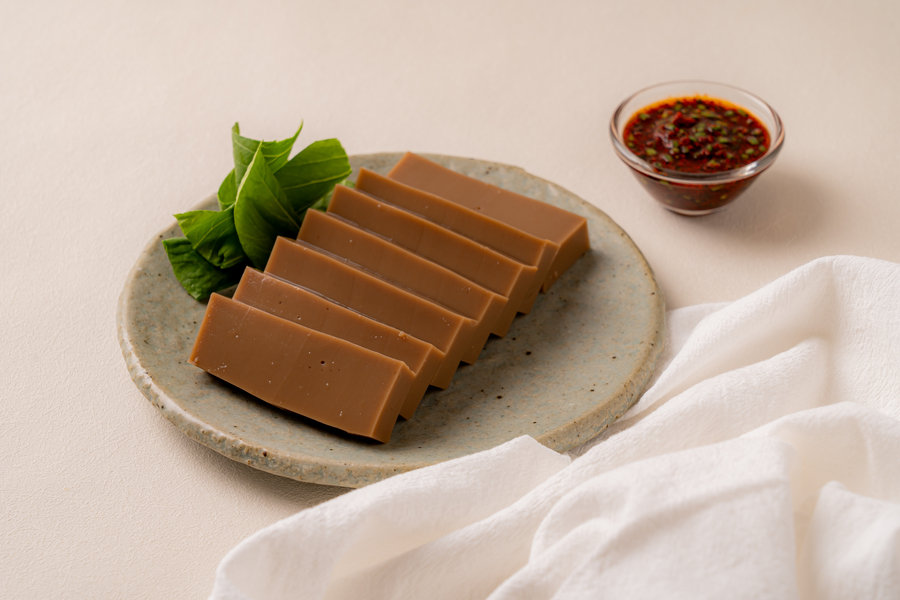
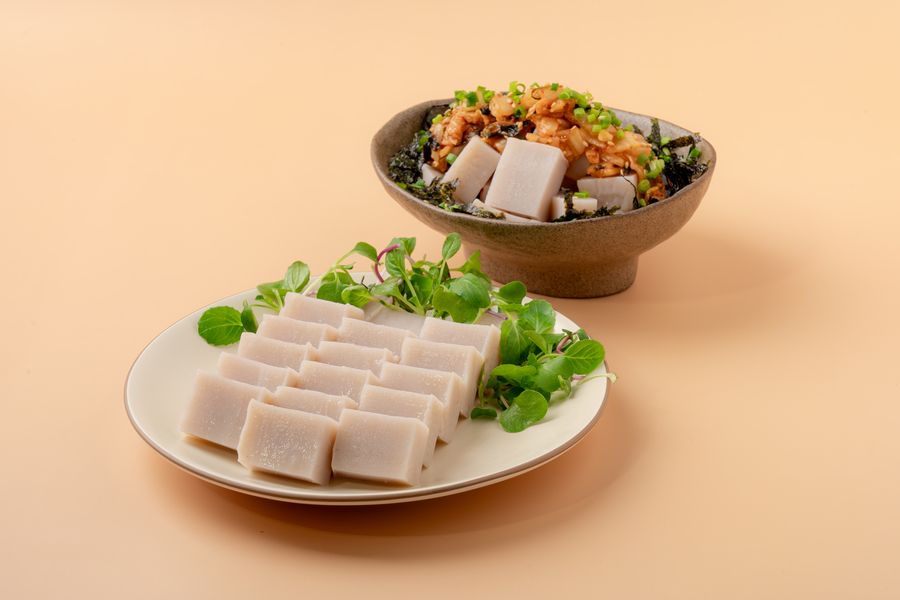
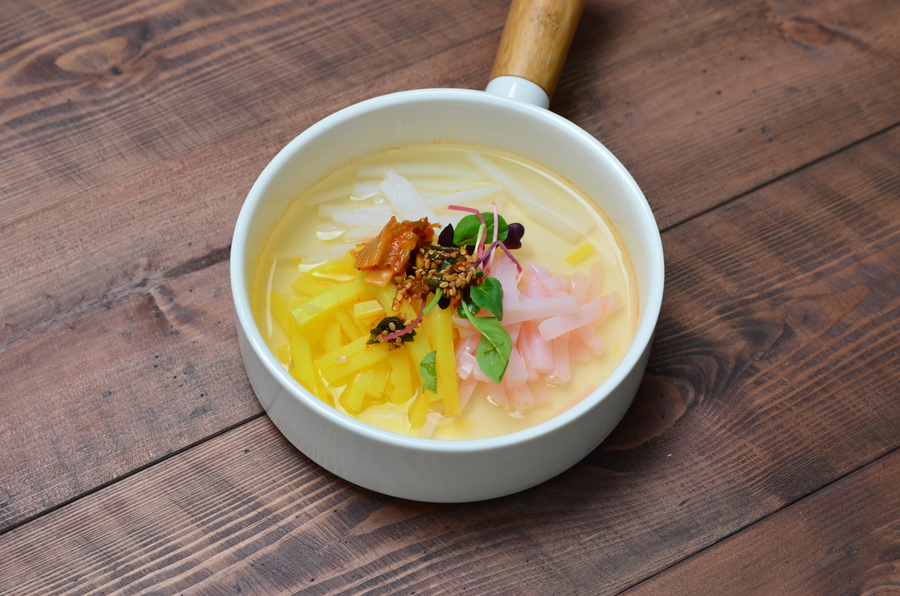
△ From top: Nenia acorn jelly, buckwheat jelly, and three-color cheongpomuk (Photo: Nenia)
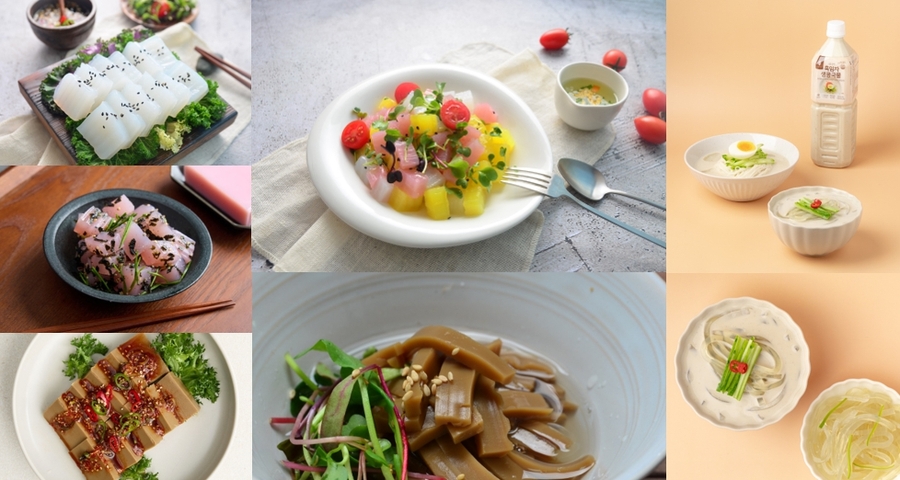
△ Nenia's jelly products and black sesame soy milk soup are popular in school cafeterias. Center top: three-color cheongpomuk salad; bottom: acorn jelly strips. Right: dishes made with agar jelly and black sesame soy milk soup (Photo: Nenia)
"For our cheongpomuk, we source whole domestic mung beans and make the starch ourselves," Ko explains. "We soak the mung beans for a day, wash and grind them, run them through a filter to extract the powder, and let it settle. All the husks are removed. Mung bean starch can ferment easily, so we mostly extract it in winter." Mung bean cheongpomuk is an essential ingredient in Jeonju bibimbap, the main component of tangpyeongchae (a classic royal court dish), and it also makes a wonderful cold jelly salad.
Nenia's buckwheat jelly is also made entirely from domestically grown buckwheat. And for the agar jelly, Nenia uses actual agar seaweed harvested from Jeju rather than agar powder. It goes beautifully in cold soy milk soup or in a salad dressed with perilla seed powder.
To prepare Nenia's acorn jelly, cheongpomuk, or buckwheat jelly, blanch around 300 grams in boiling water for about 10 minutes, then rinse in cold water — you'll get a wonderfully springy, smooth texture. Of the range, the acorn jelly carries Traditional Food certification, and none of Nenia's jelly products contain any artificial additives.
97% domestic soybean, 2% domestic black sesame, 1% refined salt. That's the full ingredient list for Nenia's Black Sesame Soy Milk Soup — also made by Nogogdan Foods. When this product first launched, Nogogdan was virtually the only producer putting black sesame into soy milk soup for retail. It was developed collaboratively between Ko Jae-min, Nenia's product development team, and CEO Kang Sang-gil.
A Company Rooted in Tradition and Story, Looking to the Future with the Spirit of Jirisan
Mid-interview, Ko Jae-min turned the question around: "How many times a year do you actually buy jelly?"
Thinking about it — maybe once or twice a year for acorn jelly, and buckwheat or agar jelly barely at all.
"So you can imagine how tough it was for us. Jelly just isn't something consumers reach for all that often — buckwheat jelly even less so. It's a slow-turnover product. That's why we had to go out and build the market ourselves. In the early days, there were years when we only sold 6 million won worth in a whole year. That was sixteen years ago." Despite those conditions, Nogogdan Foods kept pushing — and the diversity of their sales channels is what kept them afloat: school food service, military supply, institutional catering, food distribution, and general retail all together. More recently, acorn jelly, buckwheat jelly, and cheongpomuk have found a new kind of prestige in climate-conscious and plant-based menus.
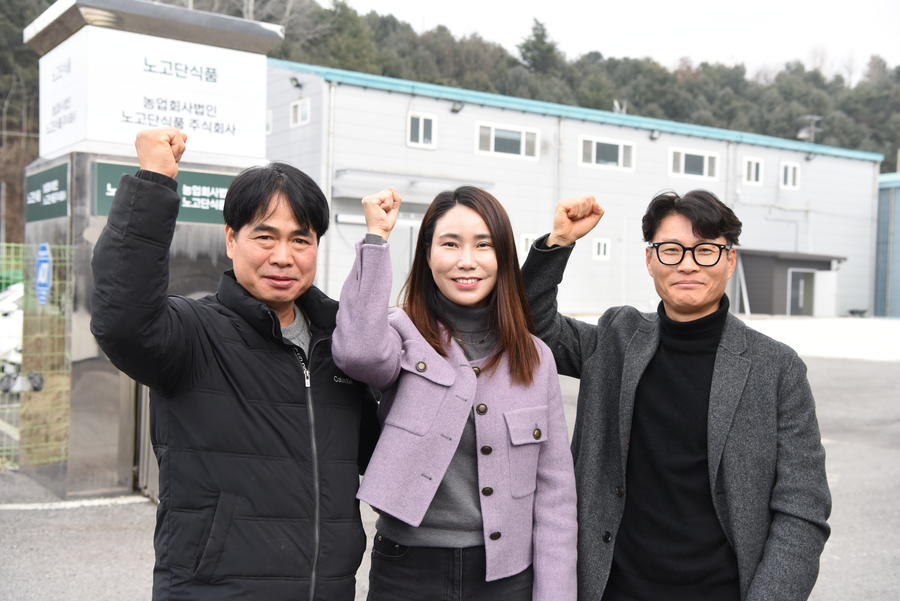
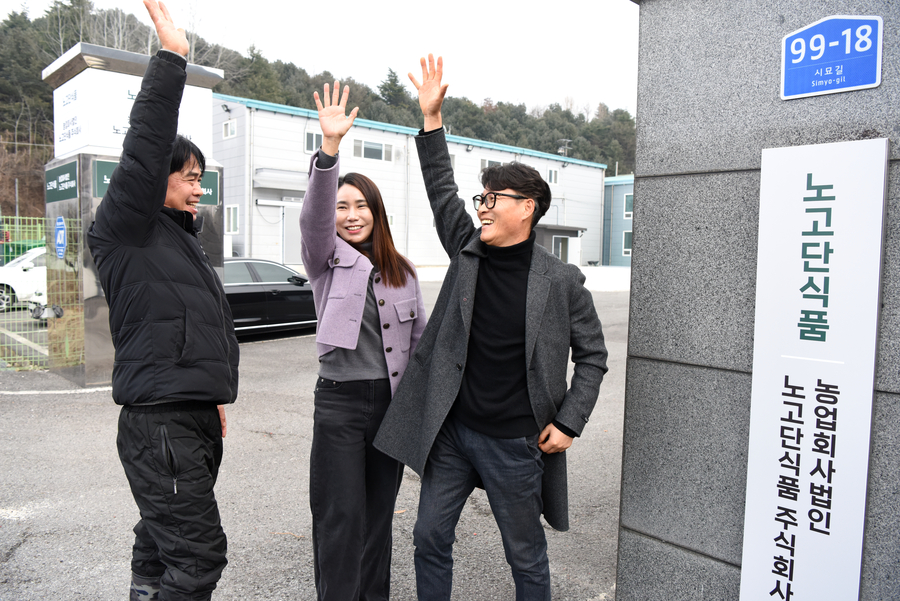
△ From left: CEO Kang Sang-gil, CEO Kim Su-young, and Head of Distribution Ko Jae-min. Nogogdan Foods is relocating to a new, more spacious facility for its next chapter. (Photo: Nenia)
A large hotel now stands in Unbong where Kang grew up — built on the very paddy fields his ancestors once farmed. Below it ran a stream where children splashed in the summers and laundry was done on the banks. From Unbong, you can see Baraebong Peak of Jirisan. The peak is famous for its royal azalea groves, and the story goes that they came to dominate because a foreign-run sheep farm once operated there — sheep would eat everything else but left the azaleas completely untouched.
Kang Sang-gil is 57 this year, running Nogogdan Foods in the hometown where all this history lives. He has held his ground against heedless development and the relentless march of capital, building a path guided instead by the accumulated wisdom and values of those who came before him. We hope Nogogdan Foods carries the spirit of Jirisan far and wide.
Nogogdan Foods is relocating this February to an industrial complex about ten minutes from downtown Namwon. With new and expanded facilities and a much more spacious, comfortable working environment, there's every reason to look forward to what comes next.
February 2026 Nenia Web Magazine Editorial Team


